A 3/16 oz bullet weight, a #3 offset worm hook, and a bag of 7-inch worms. About four dollars total. That rig will outfish everything else on Lac Saint-Louis from July through September. The Texas rig isn't glamorous, but when the lily pads are thick and the bass have seen every frog and buzzbait on the market, this is what gets bit.
Why the Texas Rig Owns the Pads
Lac Saint-Louis is full of pad fields, the big ones off Pointe-Claire, the stretches along Île Perrot, the bays near Dorion. Come August, those pads form a solid mat from shore out to twelve feet of water. Under that mat it's dark, cool, and full of crayfish and bluegills. That's where the bass live.
A frog skates across the top. A spinnerbait ticks the edges. A Texas rig goes inside. It punches through the smallest opening, slides down the pad stems, and puts a worm right in front of a bass that hasn't moved in three hours. The Texas rig isn't just weedless, it's a delivery system. You can put it anywhere you can cast.
The Right Components for Heavy Cover
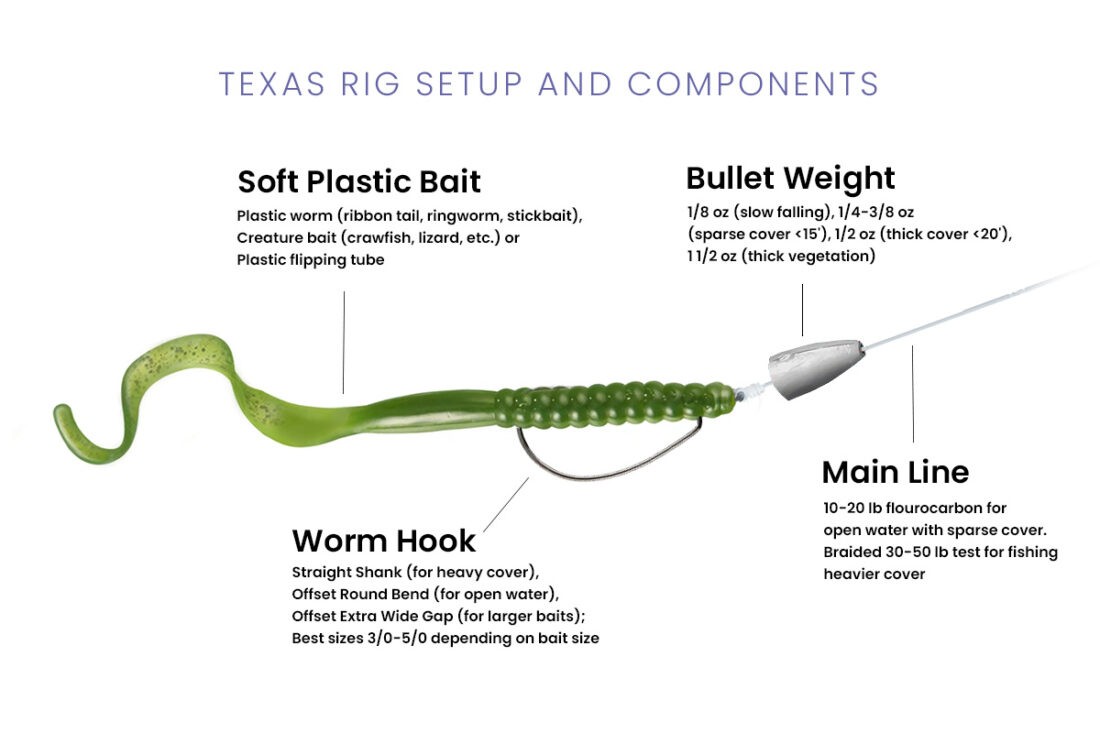
Most people use the wrong hook. In pads, you need a heavy cover hook, Mustad makes one, Gamakatsu calls theirs the Heavy Cover Offset. The wire is thicker, the bend tighter, the point sharper. A standard hook bends open on a four-pound bass in thick pads. You'll feel the fish for three seconds, then nothing.
- Weight: 3/16 oz default, ¼ oz in really thick pads. Enough to pull the worm down through the stems, too light and the bait hangs up halfway.
- Worm: 7 inch. Shorter gets lost in the roots, longer gets short strikes.
- Colours: Purple with chartreuse tail, black with blue flakes, green pumpkin, those three cover every water clarity on Lac Saint-Louis.
Tying It Right
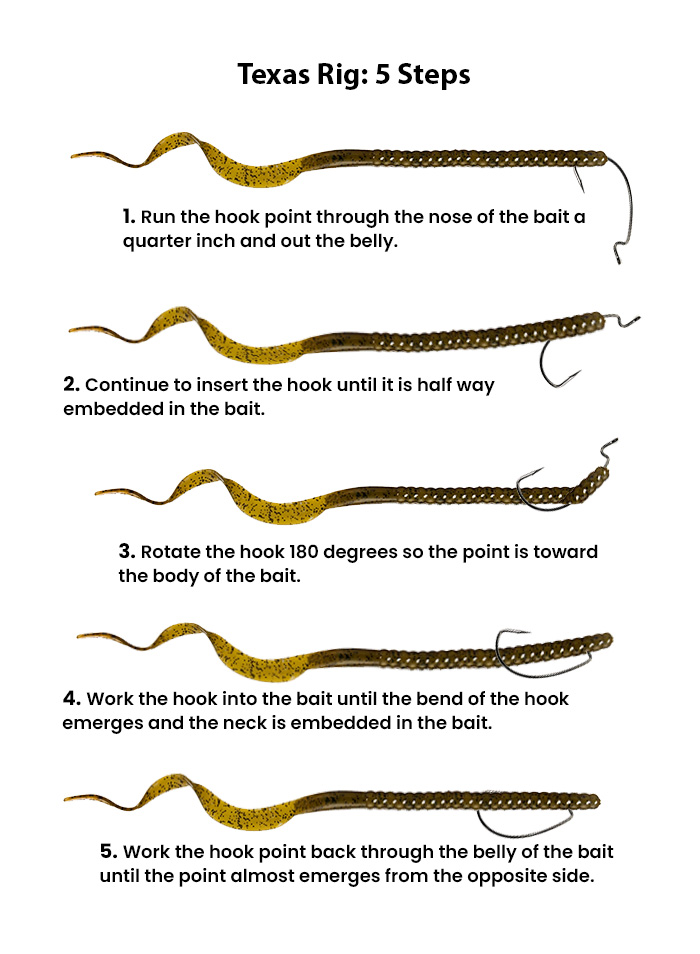
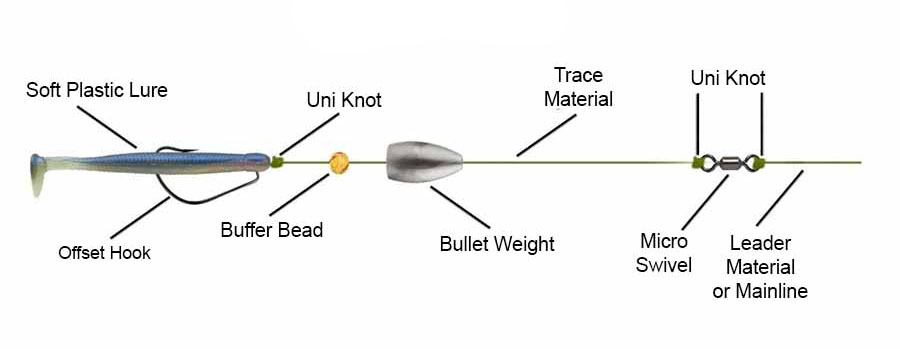
Slide the bullet weight onto your line, pointy end first. Tie on your hook. Thread the worm onto the hook point, run it up the shank, and bury the point back into the worm's body.
The most common mistake: burying the point too deep. Push it a quarter inch in and the worm becomes a blunt object, you have to drive the hook through the plastic before it reaches the fish. Bury the point just under the surface, shallow enough that you can see the outline through the plastic. That way, the slightest pressure exposes the point and the hook sets itself.
How to Fish It Through Pads
Forget the steady retrieve. In pad fields, you use the lift and drop.
- Cast into any pocket, even a dinner-plate-sized hole is plenty.
- Let the rig sink. Count to three.
- Lift your rod tip from 10 o'clock to 2 o'clock. The weight pulls the worm off the bottom.
- Let it fall on semi-slack line. The worm helicopters down, weight hits first, worm follows.
Eighty percent of bites come on the fall. You'll feel a tap or see your line jump. Don't set the hook immediately, reel down until you feel the fish's weight, then drive the hook hard. Two hands on the rod if you have to. A Texas rig hook set isn't a flick, it's a commitment.
Between casts, drag the rig across the pads. Let the weight click against the stems, let the worm slide over the leaves. That noise attracts bass, they feel the vibration through their lateral line and come up from under the pad to investigate. By the time your bait falls into the next pocket, they're already waiting.
Reading the Pad Field
Not all pads hold bass. On Lac Saint-Louis, look for:
- Pads that meet open water, the transition zone where bass travel from deep water to the shallows. They live on the inside edge where pads thin out and bottom turns from muck to gravel.
- Pads with gaps, rows of stems where something pushed through. Cast to the far end of the gap and work the rig back toward you.
- Avoid solid unbroken mats, no pockets, no edges. Bass can get in but can't feed efficiently. Move to broken pads with defined pockets.
When the Bite Dies
Some days bass won't touch a Texas rig, a front came through, water dropped five degrees overnight, they're lockjawed. Two fixes:
- Go lighter: Drop to a 1/8 oz weight, same hook and worm. Fish it slower, let it sit on bottom ten seconds between lifts. That long pause triggers reaction bites from fish that aren't actively feeding.
- Downsize the worm: 5 inch instead of 7. Same colour, same rig, smaller profile. This has turned zero-fish days into fifteen-fish days.
The One Thing That Ruins the Texas Rig
Stiff line. You need a line that doesn't hold memory.
- 14–17 lb fluorocarbon, works well, feels the bottom clearly
- 20 lb braid with a fluorocarbon leader, maximum sensitivity and abrasion resistance
- Avoid stiff mono, coils off the spool like a phone cord, kills bottom feel
Change your line every three trips if you fish pads. Abrasion against pad stems frays fluoro faster than you think, a frayed leader breaks on the hook set and you lose the fish, the worm, the weight, and the hook all at once.
What You'll Catch
Smallmouth will hit a Texas rig. So will pike and the occasional walleye. But it's built for the big, fat, lazy largemouth that live under the pads on Lac Saint-Louis, the ones that haven't seen a hook since May, the ones that eat crayfish and bluegills and won't chase anything that moves faster than a crawl.
The Texas rig doesn't ask them to chase. It lands on their head and sits still until they can't help themselves. And when a four-pound largemouth wraps your line around pad stems in heavy cover, that's a fish you earned.
Don't set the hook like you see on TV. Those guys are fishing open water with braid, sweeping the rod sideways. You're in pads. Set the hook straight up. Two hands. Hard. If you miss, check that the hook point isn't buried, cast back to the same pocket, and give it thirty seconds. That fish isn't going anywhere.

Montreal's freshwater fishing community, sharing techniques, spots, and stories from the water since 2020.