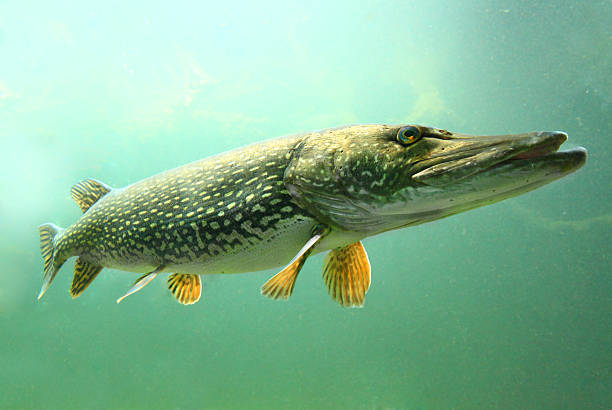
Releasing a fish doesn't guarantee it lives. That's the part most anglers don't hear often enough. The act of letting go is just the last step in a process that either set the fish up to survive or quietly killed it before it ever left your hands. Done right, catch and release works. With proper technique, survival rates exceed 95% for most species. Done poorly, that number drops below 50%. The difference is almost entirely in how you handle the fish from the moment it comes to hand.
What's Actually Happening to the Fish
Before the practical advice, it helps to understand what a caught fish is going through. It's not just tired. The fight triggers a serious physiological response.
The process of angling causes an increase in cortisol and lactate, a decrease in blood pH, and a range of other issues including cardiac and respiratory disturbances and a diminished immune response, making a released fish more susceptible to bacterial, viral, and fungal infection. That immune suppression is why a fish can swim away looking fine and die two days later. The damage isn't always visible.
When a fish fights, its muscles produce lactic acid, the same compound that burns in your legs during a hard sprint. Extended fights build dangerous levels that can kill a fish hours after release.
The takeaway: every decision you make from hookset to release either adds to that physiological burden or reduces it.
Use the Right Gear for the Fish You're Targeting
Fight length is one of the biggest variables in post-release survival, and fight length is largely determined by your tackle. Fishing light line for large fish is entertaining until you consider what a 10-minute fight does to a fish that heavier gear would have landed in two.
Use a rod with the highest weight you're comfortable with, and line of the highest breaking strength that will still allow you to fish effectively. The faster the fish gets to net, the more likely it is to survive.
That's not an argument against lighter gear in general. It's an argument for matching your tackle to your target. Chasing big walleye or pike on undersized spinning gear because it's more fun puts the fish at real risk if you're planning to release it.
Hook Choice Matters More Than Most Anglers Think
The type of hook you use has a direct impact on where the fish gets hooked and how easily it comes off. Both of those things affect survival.
Circle hooks reduce release mortality by 50% or more compared to J-hooks when bait fishing, and they hook fish in the corner of the mouth the vast majority of the time. A corner-of-mouth hook is fast to remove, causes minimal tissue damage, and almost never results in a gut-hooked fish.
Barbless hooks, or hooks with the barb pinched flat with pliers, are worth considering for any species you intend to release. You'll lose more fish during the fight, but the hook comes out in seconds with no tearing, and the fish is back in the water faster. For slot fish, regulated species, or anything you know you won't be keeping, the case for barbless is strong.
The gut-hook situation deserves specific mention. A gut-hooked fish with the hook left in has a 60 to 70% survival rate. A gut-hooked fish where the hook was forcibly removed has less than 20% survival. Cut the leader as close to the hook as possible and release the fish. The hook will corrode and pass. Don't try to pull it out.
Keep It in the Water
This is where the gap between intention and practice is biggest. Most anglers know they should minimise air exposure. Fewer actually do it.
Keeping an exhausted fish out of water is like holding a bag over a runner who just completed a marathon. The fish is already oxygen-depleted from the fight. Air exposure compounds that rapidly.
A 10-second rule is a reasonable target: from net to release in 10 seconds or less if you're not taking a photo. For photos, keep the fish in the water until the camera is ready, lift for 3 to 5 seconds maximum, then put it back. If you can't get the shot in 5 seconds, the fish goes back and you try again.
Keeping the fish in the net in the water while you remove the hook is almost always possible and should be the default. The fish doesn't need to come out until the hook is already clear.
"A 10-second rule is a reasonable target: from net to release in 10 seconds or less if you're not taking a photo. For photos, keep the fish in the water until the camera is ready, lift for 3 to 5 seconds maximum, then put it back."
Handling: Wet Hands, Horizontal, No Squeezing
How you hold a fish matters. Dry hands strip the protective mucus layer that keeps pathogens out. Never use a towel, glove, or cloth to hold a fish. Always wet your hands first.
Hold fish horizontally whenever possible. A large fish held vertically by the jaw has its entire body weight pulling down on its jaw joint and spine, neither of which are built for that load. For smaller fish, the jaw hold is fine. For anything over a couple of kilograms, support the body with your other hand under the belly.
Hook position has a significant effect on survival. Fish hooked in the gills or gut have substantially lower survival rates than those hooked in the mouth. If you see blood coming from the gills, the odds are poor. That fish is better harvested if it's a legal size, rather than released to a slow death.
Never squeeze the fish around the midsection. The internal organs have no bony protection on the sides. Gripping too hard bruises them.
The Photo: Make It Count Without Costing the Fish
The fish photo is where a lot of well-intentioned catch and release goes wrong. The fish comes to the net, the angler starts fumbling for their phone, the fish sits in the net getting stressed, then gets lifted out for a shot that takes 30 seconds to set up.
Get your camera ready before the fish comes to hand. Decide who's shooting before the net goes in. Have a plan. The fish doesn't care about your Instagram, and it shouldn't have to pay for a poorly organised photo session.
Keep the fish as low as possible over the water when you lift it. If it wriggles and falls, it goes back into the water rather than onto the deck or rocks. A fish that hits a hard surface can sustain internal injuries that aren't visible but are fatal.
Water Temperature: When to Stop Fishing
This is the most underused piece of catch and release knowledge. Water temperature profoundly affects how much stress a fish can survive.
Research has clearly shown that bass die much more readily when water temperature reaches 27°C or higher, likely due to increased metabolism combined with lower dissolved oxygen availability at warm temperatures.
For cold-water species like trout and salmon, the threshold is lower. When summer water temperatures climb into ranges that stress the fish, catch and release stops being conservation and starts being harassment. Many experienced anglers and fly fishing guides simply don't fish for trout when water temperatures are too high, regardless of whether regulations permit it.
Check water temperature before you go out in summer. Fish early morning when temperatures are at their coolest. If you're catching fish that are taking a long time to revive, that's the water telling you something.
Reviving the Fish Before You Let Go
A fish that's ready to be released will hold itself upright and kick away under its own power when you open your hand. A fish that rolls onto its side when you release it is not ready.
Hold the fish gently in the water, facing into the current if there is one. Support it lightly under the belly and let it breathe. Don't pump it back and forth aggressively: gentle, steady positioning in oxygenated water is enough. When it starts to stabilise and its fins engage, ease your grip. When it kicks, let it go.
In still water with no current, position the fish facing open water and hold it steady. Give it time. Some fish recover in 30 seconds. A large fish after a hard fight in warm water might need several minutes. Don't rush it.
If a fish won't revive after several minutes of proper revival attempts, something is wrong beyond exhaustion. At that point, if it's a legal size and keeping it is an option, it's a better outcome than releasing a fish that's going to die anyway.
"A fish that's ready to be released will hold itself upright and kick away under its own power when you open your hand. A fish that rolls onto its side when you release it is not ready."
Barotrauma: The Deep Water Problem
For species caught in deeper water, particularly fish pulled from 30 feet or more, barotrauma is a separate problem from fight exhaustion. As the fish is brought up, the reduced pressure causes gas in the swim bladder to expand. The results are visible: bloated belly, bulging eyes, stomach protruding from the mouth.
A fish with barotrauma can't swim back down after release. Research shows survival rates drop to 67% for fish pulled from 30 metres without treatment, and as low as 17% from 60 metres.
The best solution is a descender device, a weighted clip that holds the fish at depth long enough for the swim bladder to recompress, then releases it. It's the most effective tool for deep-water release and worth having on the boat if you regularly fish deep structure for walleye, lake trout, or bass.
Venting with a hollow needle is an alternative, but it requires practice and correct placement. Done incorrectly it does more damage than it prevents.
Species Aren't Equal
Not all fish handle catch and release the same way, and adjusting your approach by species makes a real difference.
Warm-water species like largemouth and smallmouth bass, northern pike, and perch are relatively hardy. They recover well from a properly conducted catch and release in appropriate temperatures and are tolerant of brief handling.
Trout and salmon are more fragile. They're cold-water fish with a lower tolerance for warm-water stress and air exposure, and they need to be treated with corresponding care. Short fights, cold water, minimal handling, and quick release.
Walleye sit somewhere in between. They're not as delicate as trout but the eyes are sensitive and gill damage is particularly serious. Keep walleye in the water as much as possible during hook removal.
Musky are large, powerful fish that fight hard and can be genuinely exhausted by a long battle. Reviving a musky properly often takes longer than most anglers expect. Keep it in the water, support it fully, and don't let go until it's demonstrably ready.
The Bottom Line
Catch and release done well is genuinely effective conservation. Between 18 and 20% of released fish die on average, but that number drops dramatically with proper technique. The fish that swim away from an angler who uses appropriate gear, keeps them in the water, handles them wet and horizontal, and takes a quick photo before a proper release have a high probability of surviving and spawning again.
The ones that get held up vertically for a 45-second photo after a 10-minute fight in 28-degree water while the angler's dry hands grip them around the midsection are unlikely to make it through the day. The gap between those two outcomes is entirely in the angler's hands.
20+ years fishing Quebec's freshwater systems. Kayak angler, catch-and-release advocate, and founder of Sub Urban Anglers.
Read More About Me