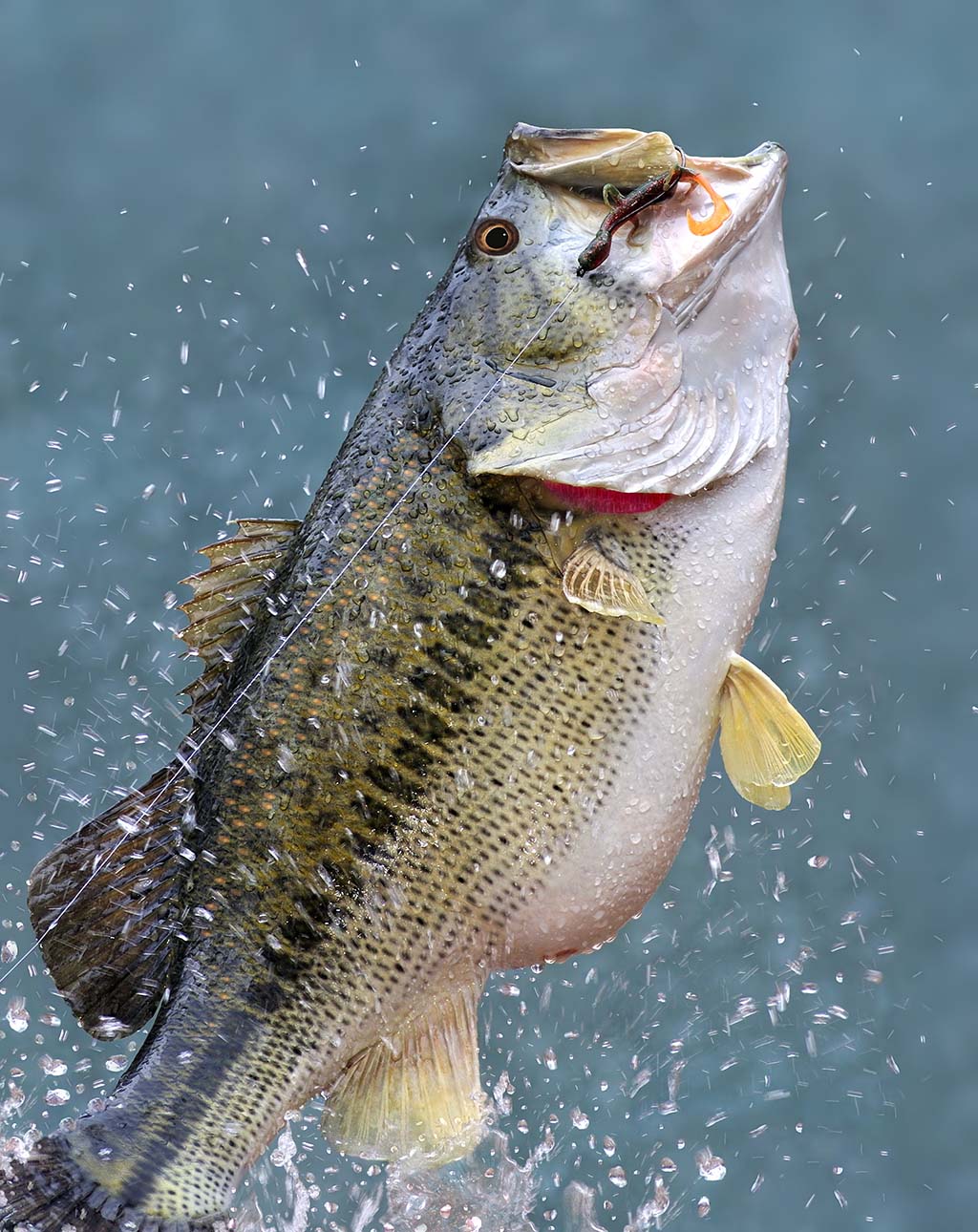
Largemouth bass are the most accessible trophy fish in Montreal. They live in the same water you drive past every day, the bays of Lac Saint-Louis, the back canals of Île-Perrot, the weedy margins of Lac des Deux Montagnes. No boat required for most spots. From late May through September, a well-placed cast to the right piece of cover can connect you with a hard-fighting fish that will test your gear and your nerves in equal measure.
How Largemouth Bass Think
Bass are cover-oriented predators. Unlike walleye that roam open structure or pike that lurk on open weed edges, largemouth relate tightly to specific objects, a dock leg, a fallen tree, a pad of lily pads, a submerged boulder. They sit inside or tight to that cover and explode on prey that comes within range. Your job is to put a lure right on the object, not near it. Six inches off a dock piling versus six feet off it is often the difference between a strike and nothing.
Water temperature dictates everything. Below 12°C in spring, bass are lethargic and need a slow-moving presentation right on the bottom. From 16°C to 24°C is the prime feeding window, fish are active, aggressive, and will chase lures. Above 28°C in peak summer, bass move into shade, seek oxygenated water near weed growth, and feed most actively at dawn and dusk.
Seasonal Breakdown
Spring, Pre-Spawn & Spawn (May – mid-June)
Pre-spawn bass are the biggest fish of the year and they're feeding hard to build energy reserves before the spawn. Target the first available south-facing shallow bays on Lac Saint-Louis as water temperatures climb above 12°C. Fish transition areas, the edge where the main lake meets shallow bays, points with adjacent deep water, the first dock or laydown on a flat. A Texas-rigged worm worked slowly along bottom, a jig-and-pig crawled over rocks, or a slow-rolled spinnerbait are all excellent choices.
Once water hits 18°C to 20°C, bass move into one to four feet to spawn on gravel or sand beds. These fish are visible and often frustrating, they protect the bed rather than feed, but a persistent soft plastic dropped on or near the bed will eventually produce a reaction bite. Please consider releasing spawning fish quickly; a female off the nest even briefly can result in lost eggs or fry.
Summer (late June – August)
Post-spawn fish scatter and recover, then begin an active summer feeding pattern. Early morning and late evening topwater fishing from late June onward is one of the most exciting experiences in freshwater fishing. Work a Zara Spook, hollow-body frog, or buzzbait over lily pads, along dock lines, and across shallow flats in the hour after sunrise and before dark. Mid-day, move to deeper shade: docks with long shadows, bridges, thick vegetation like coontail and milfoil. A dropshot rig, shakey head, or wacky-rigged Senko fished in and around docks and shade structure is deadly on pressured summer bass.
Fall (September – October)
Fall bass fishing shifts from finesse to power. As temperatures cool below 20°C, largemouth chase baitfish, mainly shad and perch, along transition zones between vegetation and open water. Crankbaits, swimbaits, and chatterbaits cover water quickly and provoke reaction strikes from aggressive, feed-mode fish. Work main lake points, the edges of dying weed beds, and any rocky transition where bass stage before winter. The bite windows expand compared to summer, fish feed all day, not just at dusk.
Top Presentations
Texas Rig
The Texas rig, a bullet weight, offset hook, and soft plastic worm or creature bait, is the most versatile bass presentation ever developed. It skips under docks, punches through thick vegetation, and slides along rocky bottom without hanging up. Use a 3/16 to 3/8 oz bullet weight with a 4/0 offset hook and a 6-inch straight worm or a craw imitation. For Lac Saint-Louis, green pumpkin, watermelon red, and dark brown are local favourites. See our detailed Texas Rig guide for rigging instructions and technique.
Topwater Frogs & Buzzbaits
Nothing in freshwater fishing beats a blow-up on a surface lure. A hollow-body frog (SPRO, Booyah) worked slowly over lily pad mats and thick vegetation triggers violent surface strikes from bass hiding underneath. Cast beyond the pad edge, work the frog across the surface with short rod pops, and pause in gaps between pads. When a fish blows up, wait until you feel the weight before setting the hook. Buzzbaits produce the same explosive strikes along open shorelines, keep the bait moving just fast enough to stay on the surface.
Wacky Rig Senko
The wacky-rigged Yamamoto Senko (4 or 5 inch) is the most reliable finesse presentation for Montreal bass, especially on pressured water. Hook the worm through the middle with a size 1/0 weedless hook, cast to visible structure, and let it fall on a slack line. The bait shimmies on the fall and most strikes come before it reaches the bottom. No retrieve needed, lift gently, let it fall again. On tough days when nothing else works, the wacky rig produces.
Crankbaits
A squarebill crankbait is the tool for fast-water bass and rocky banks. Run a Strike King KVD 1.5 or similar squarebill along rip-rap, over submerged gravel points, and tight to visible cover like laydowns. The flat-sided body deflects off rocks and triggers reaction strikes. For suspended fish and open water, a medium-diving crankbait worked on a stop-and-go retrieve is excellent in spring and fall.
"Six inches versus six feet. The cast that lands on the dock piling gets bit. The cast that lands near it gets ignored. Precision is the game."
Gear Setup
Bass tackle varies by technique, but two setups cover most situations. For power fishing, flipping, pitching, and topwater, use a 7-foot medium-heavy baitcaster with 15 to 20 lb fluorocarbon or 50 lb braid. For finesse work (drop shot, wacky rig, light jigs), use a 6.5 to 7-foot medium-light spinning rod with 10 lb braid and a 6 to 8 lb fluorocarbon leader.
If you're fishing one rod, a 7-foot medium spinning rod with 10 lb braid and 8 lb fluoro leader is the most versatile single-rod setup for Montreal bass. It handles the Texas rig in lighter cover, a wacky Senko, and a light crankbait all without retying.
Where to Fish: Montreal Bass Spots
Lac Saint-Louis is the premier largemouth destination in the Montreal area. The Pointe-Claire and Beauharnois shorelines hold bass from late May through September. Any dock, marina, or weedy bay is worth fishing. The back channels of Île-Perrot and Lac Saint-François offer more sheltered water with abundant vegetation. Canal de Lachine holds surprisingly good bass along its stone walls and dock structures, accessible to everyone without a boat.

20+ years fishing Quebec's freshwater systems. Kayak angler, catch-and-release advocate, and founder of Sub Urban Anglers.
Read More About Me