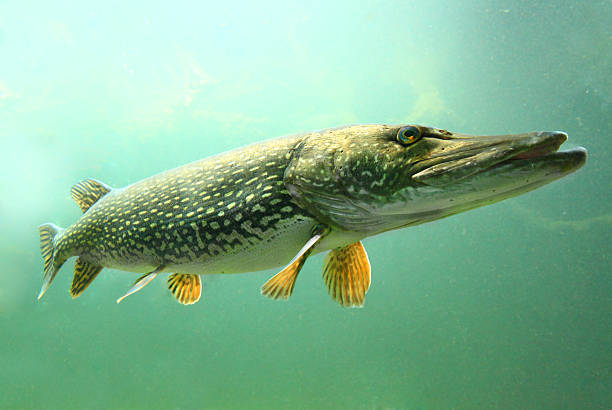
Northern pike are Montreal's apex freshwater predator. Aggressive, territorial, and built for ambush, they can be found in virtually every major water body in the greater Montreal region, from the reedy bays of Lac Saint-Louis to the wild stretches of Rivière des Mille-Îles. Once you understand how pike think, catching them consistently becomes a matter of showing up at the right place at the right time with the right lure.
Understanding Pike Behaviour
Pike are ambush predators. They don't chase prey across open water the way walleye do, they sit in cover, wait, and explode on anything that passes within striking range. That ambush instinct dictates almost every tactic you'll use to catch them. Your job is to put a lure close to the edge of that cover and trigger a reaction strike.
Water temperature is the single biggest driver of pike behaviour. In cold water below 15°C, they move slowly and prefer a slower presentation. As water warms into the high teens and low 20s, they become more aggressive and will chase faster-moving lures. Above 24°C in summer, pike move deep or seek cold, oxygenated water near weed edges and river current.
Seasonal Breakdown
Spring (April – May)
Spring is the premier pike season in Quebec. As ice retreats, big females push into the shallowest bays and tributary mouths to spawn in water as shallow as two to five feet. This is when the biggest pike of the year are most accessible. Target protected bays with last year's dead weeds, points adjacent to shallow flats, and any area where warm runoff flows in. Large spoons, Rapala F-11s, and inline spinners all work exceptionally well. Fish slowly at first, water temps are still cold, then increase your retrieve speed as April turns to May.
Summer (June – August)
Summer pike fishing requires a shift in thinking. As water temperatures peak, most pike abandon the shallow weeds and reposition on deeper weed edges, submerged points, and cool-water sections of rivers near inflows. Target the 12 to 22 foot depth range. Large swimbaits worked along weed lines, jigged tube baits, and trolled crankbaits are your best summer options. Early morning and late evening remain the most productive windows when surface temps are a few degrees cooler.
Fall (September – November)
Fall is arguably the best all-around season for big pike. As water cools back below 18°C, fish move back shallow and feed aggressively to build fat reserves for winter. Large profile baits produce well, big glide baits, large spoons, and swimbaits in natural baitfish colours. Focus on the same shallow bays used in spring. Pike will stage on the last green weed edges as fall progresses, so follow the weeds deeper as the season winds down.
Where to Find Them: Montreal Hot Zones
On Lac Saint-Louis, work the weedy bays along the Châteauguay shore and the protected areas near Beauharnois. The Rivière des Mille-Îles has excellent pike throughout its length, target weedy backwaters and the slower sections near Laval. The Back Channel of the St. Lawrence behind Île Perrot holds fish year-round, especially in spring when pike flood the shallow marsh areas. Lac des Deux Montagnes is also worth exploring, it holds a solid population of mid-sized pike that rarely see heavy pressure.
"Pike don't chase. They sit, wait, and explode. Cast to the edge of cover and let the lure do the triggering."
Top Lures & Presentations
Spoons
The classic Daredevil in red and white is still one of the most effective pike lures ever made. Cast it past weed edges, let it flutter down slightly, then retrieve with a steady pull-pause rhythm. In clear water, use silver and natural colours. In stained water, go with bright chartreuse or orange.
Inline Spinners
Mepps, Blue Fox, and Vibrax spinners in size 4 and 5 are outstanding spring producers. The blade flash and vibration trigger pike even in cold, off-coloured water. Fish them just fast enough to keep the blade spinning, and vary your retrieve depth.
Jerkbaits & Soft Plastics
For pressured fish or slower fall conditions, large suspending jerkbaits in natural perch or sucker patterns are deadly. Work them with a twitch-pause-twitch cadence and hold the pause for three to five seconds. Big soft plastic swimbaits on a heavy jig head (1 to 1.5 oz) cover water quickly in summer and produce fish from mid-depth weed lines.
Essential Gear Setup
A 7-foot medium-heavy or heavy action rod paired with a baitcasting or quality spinning reel is the standard pike setup. Spool it with 30 to 50 lb braid, zero stretch and high abrasion resistance are both important when fishing around weeds and hard structure.
Always use a steel wire leader or minimum 80 lb fluorocarbon leader. Pike teeth will slice through anything lighter in a heartbeat. A 12-inch leader is sufficient for most applications. Bring long-nose pliers and a jaw spreader for safe hook removal. Never put your fingers inside a pike's mouth.
Landing & Handling
Use a large rubber-mesh net. Avoid dry hands or towels on the fish, wet your hands before touching any pike you plan to release. Support the fish horizontally, remove the hook quickly, and ease it back into the water headfirst. Most pike will kick away immediately. If a fish is sluggish, hold it upright in the water and gently move it back and forth until it swims off on its own.
20+ years fishing Quebec's freshwater systems. Kayak angler, catch-and-release advocate, and founder of Sub Urban Anglers.
Read More About Me